
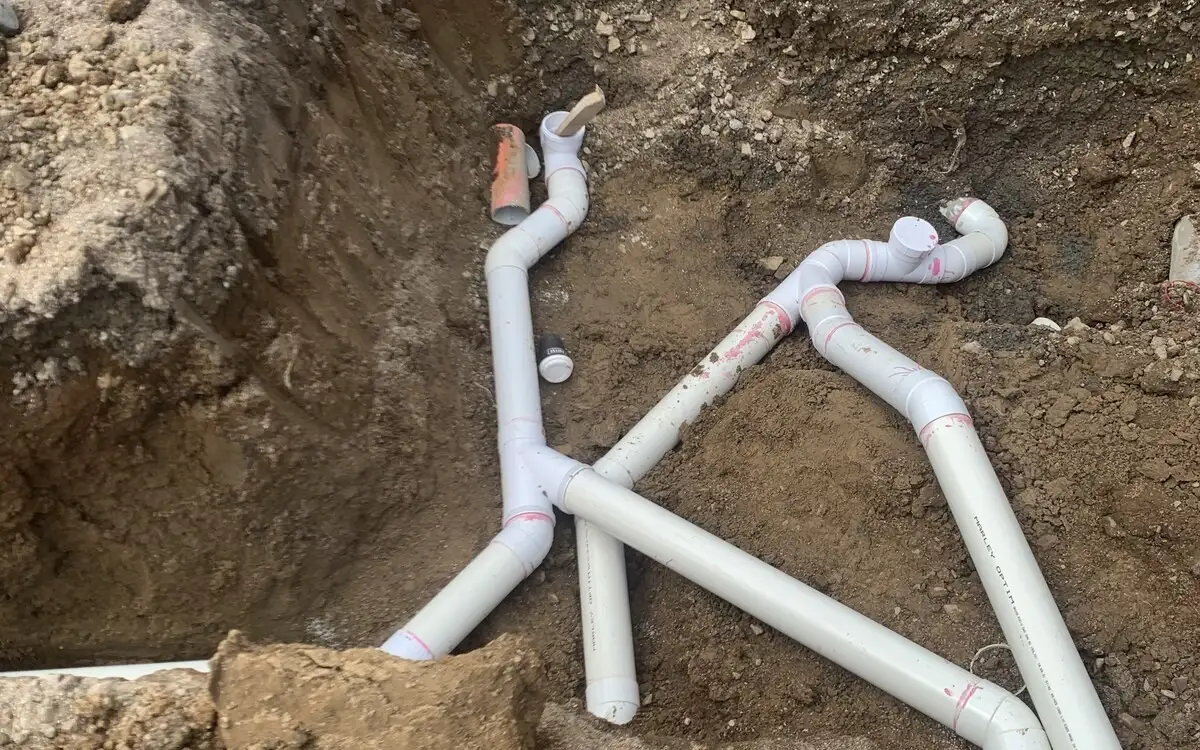
A gully trap is the grated drain at ground level outside your house, usually near the kitchen, laundry or bathroom. It collects waste water from inside and passes it to the sewer. It’s also the drain system’s safety valve: if the drain beyond it blocks, waste water comes up outside through the gully instead of through your shower or toilet.
So an overflowing gully trap is usually doing its job. It’s telling you something downstream is blocked. A smelly one usually means its water seal has dried out, or debris has built up in it.
This guide covers what each symptom means, who to call first, and what you can safely do yourself. The rules quoted come from the Building Code, Watercare and the Plumbers, Gasfitters and Drainlayers Board.
What is a gully trap and what does it do?
A gully trap is an outside drain with a grated top and a U-bend underneath that always holds water. It does three jobs. The water seal stops sewer gas and pests coming up out of the drain. It collects the waste pipes from the kitchen, laundry and bathroom. And it’s the overflow point, so a blocked drain floods outside, not inside.
That last job is why the Building Code sets its height. Under the acceptable solution G13/AS2, the top of the gully dish must sit at least 150 mm below the overflow level of the lowest fixture inside the house, usually the shower. If the drain blocks, the gully overflows well before water reaches that fixture.
Why is my gully trap overflowing?
Because water can’t get away down the drain beyond it. The cause is usually fat, wipes or other rubbish, tree roots in the pipe, or a damaged pipe. In heavy rain it can also be stormwater getting into the wastewater system. When and how it overflows tells you a lot about where the blockage is:
| What you see | What it usually means | Who to call first |
|---|---|---|
| It overflows only when you run water inside, then drains slowly | A blockage in the gully trap or your drain just beyond it | Watercare, to rule out the public sewer, then a drainlayer |
| Sewage or toilet paper coming up through the grate | A blockage further down, past where the toilet joins the drain | Watercare, then a drainlayer |
| It overflows in heavy rain, then settles | Stormwater getting into the wastewater drain, from a downpipe or a damaged pipe, or the public network overloaded | Watercare |
| Neighbours’ gullies or a manhole in the street are overflowing too | A problem in the public sewer | Watercare |
| Water sits at the rim with nothing running inside | A full blockage downstream | Watercare, then a drainlayer |
Should I call Watercare or a plumber first?
Call Watercare first. For a blocked drain or a wastewater overflow on your property, Watercare asks you to call them before a plumber, on (09) 442 2222, option 1. They check whether the cause is the public sewer, which is theirs to fix, or your private drain, which is yours. Take photos of the overflow.
The dividing line for wastewater depends on where the public sewer runs. If it runs through your property, your responsibility ends where your pipe joins it. If it runs outside your boundary, your responsibility ends where your pipe leaves the property.
If the blockage turns out to be on your side, you need a licensed drainlayer. Watercare says it generally doesn’t reimburse work done by a private plumber, so it’s worth getting their answer before you book one. Our guide to water leaks and who pays covers the same boundary for water supply pipes.
What should I do while it’s overflowing?
- Stop running water inside. Hold off on showers, flushing, the washing machine and the dishwasher. Everything you run adds to the overflow.
- Call Watercare on (09) 442 2222, option 1, and take photos of the overflow.
- Keep children and pets away from the overflow and any wet ground around it.
- Wear gloves and gumboots if you need to go near it, and wash your hands and the clothes you were wearing afterwards.
- Clean up once it has stopped. Scrub hard surfaces with detergent and water, and keep the run-off out of the stormwater drains.
Health New Zealand’s advice is to avoid contact with wastewater overflows and keep tamariki and pets away. If you feel unwell afterwards, call your doctor or Healthline on 0800 611 116.
Why does my gully trap smell?
Usually because its water seal has dried out, letting sewer gas straight up through the grate. Debris sitting in the dish can smell as well. A smell that comes with slow drainage or water sitting higher than normal points to a partial blockage further down. Match the smell to the likely cause:
| When it smells | Likely cause | What to do |
|---|---|---|
| After a dry spell, or when the house has been empty | The water seal has evaporated | Pour a bucket of water into the gully to refill the seal |
| All the time, with leaves or scraps in the dish | Debris rotting in the gully | Lift the grate and clear the dish, wearing gloves |
| With slow drainage, or water sitting higher than usual | A partial blockage downstream | Have the drain checked before it blocks fully |
| With gurgling from sinks or the toilet inside | Air being pulled through a restricted drain | Have the drain checked |
A dry seal is more likely where little water runs into the gully. That’s why the Building Code requires at least one waste pipe to discharge into every gully trap: the regular flow keeps the seal topped up.
What can I do myself, and what needs a drainlayer?
The Plumbers, Gasfitters and Drainlayers Board lets homeowners clear blocked drains, as long as that doesn’t involve altering or repairing the inspection pipe or vent pipe. What you can’t do is install, alter or repair a drain or any trap. That work has to be done by a licensed drainlayer.
You can:
- Lift the grate and clear leaves and debris from the dish.
- Refill a dry water seal with a bucket of water.
- Keep the grate clear and loose, so it can lift if the drain surcharges.
A licensed drainlayer should:
- Clear a blockage beyond the dish, with drain rods or a water jetter.
- Find the cause: roots, a cracked or collapsed pipe, or a dip where waste collects.
- Repair, raise, move or replace the gully trap or the drain.
Clearing a blockage without finding its cause usually means it comes back. See how we handle blocked drains: we find the cause, clear it properly and tell you what, if anything, needs fixing.
Is my gully trap set up correctly?
Many North Shore gully traps were installed decades ago, and landscaping, new paving and extensions since then can leave them out of step with the rules. Check yours against the Building Code’s acceptable solution G13/AS2:
- Rim height: at least 25 mm above paving, or 75 mm above unpaved ground, so surface water can’t run in.
- Below the lowest fixture: the top of the dish at least 150 mm below the overflow level of the lowest fixture inside.
- Grate: fitted, and able to lift if the drain surcharges.
- Water seal: at least 65 mm deep.
- Access: in a visible position, with at least 600 mm of clear space above it.
- Overflow path: positioned so an overflow can’t run into or under the house.
- No stormwater: downpipes must not discharge into the gully.
That last point is a bylaw, not just a guideline. Watercare’s bylaw says no person may cause or allow stormwater to enter the wastewater network or any private drain connected to it. A downpipe running into a gully trap is a common cause of overflows in heavy rain.
Your hot water cylinder’s relief valve drain often ends over the gully trap too. That’s allowed, and a little water from it while the cylinder heats is normal. Our guide to cylinder overflow pipes explains when that drip means a fault.
How do I stop it happening again?
Most overflows come back to what goes down the drain, and what grows into it:
- Fat and oil: let it set, then put it in the bin, not down the sink.
- Wipes and sanitary products: in the bin, even the ones labelled flushable.
- Tree roots: Watercare says tree roots can spread 1.5 times further than a tree’s adult branches. If the same drain keeps blocking, roots at a joint are a common reason.
- The grate: keep it clear of leaves, and keep garden beds and paving below the gully’s rim.
- Downpipes: make sure none of them run into the gully.
If yours keeps overflowing, the drain itself is usually the problem, not what you put down it: a belly in the pipe, roots at a joint, a collapsed section, or a gully trap that was never quite right. We find which, and you get the price for the fix before we start.